
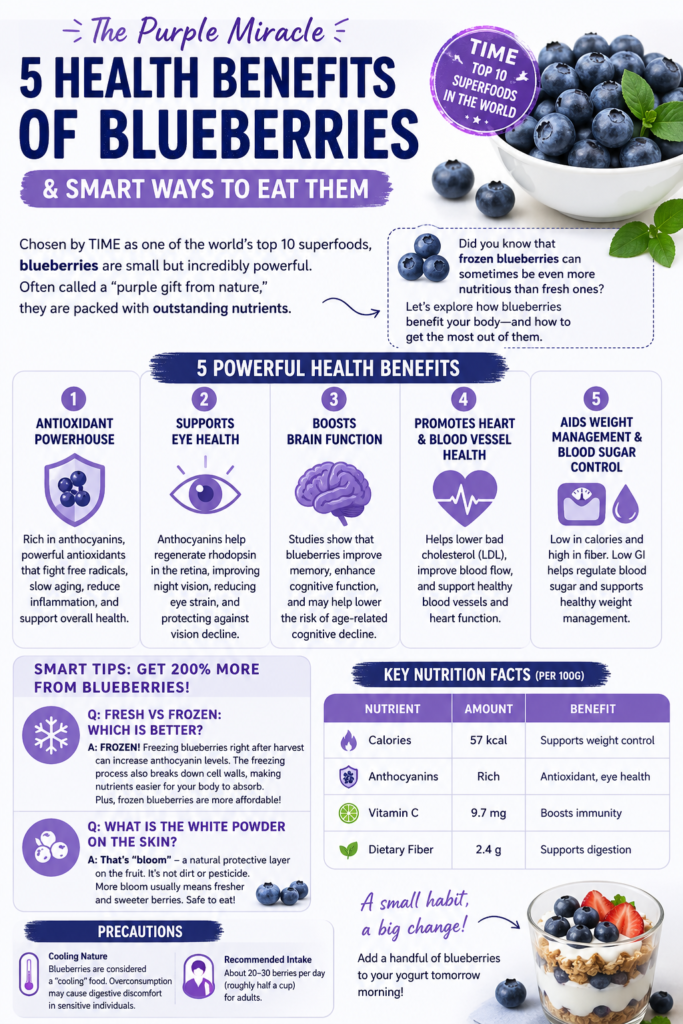
“The Purple Miracle” — 5 Health Benefits of Blueberries & Smart Ways to Eat Them
Chosen by TIME as one of the world’s top 10 superfoods, blueberries are small but incredibly powerful. Often called a “purple gift from nature,” they are packed with outstanding nutrients.
Did you know that frozen blueberries can sometimes be even more nutritious than fresh ones? Let’s explore how blueberries benefit your body—and how to get the most out of them.
1. The King of Antioxidants: Anthocyanins (Anti-Aging)
The deep purple color of blueberries comes from anthocyanins, powerful antioxidants that help neutralize harmful free radicals in the body. This slows down cellular aging, reduces inflammation, and supports healthy skin and disease prevention.
2. Clearer Vision & Eye Protection
There’s a famous story from World War II where British pilots consumed blueberries to improve night vision. Anthocyanins help regenerate rhodopsin, a protein in the retina responsible for detecting light. This supports eye health, reduces fatigue, and may help prevent vision decline.
3. Brain-Boosting Superfood
Regular consumption of blueberries has been linked to improved memory and enhanced brain function. They may help reduce the risk of cognitive decline and are a great snack for students or anyone needing better focus.
4. Heart & Blood Vessel Health
Blueberries help reduce LDL (bad cholesterol) levels and promote better blood circulation by supporting blood vessel function. They are highly recommended for maintaining cardiovascular health.
5. Weight Management & Blood Sugar Control
With only about 57 kcal per 100g and rich in dietary fiber, blueberries are ideal for weight management. They also have a low glycemic index (GI), helping improve insulin sensitivity and making them a suitable fruit for people managing blood sugar.
Pro Tips: How to Get 200% Benefits from Blueberries
Q: Fresh vs Frozen — Which is Better?
Answer: Frozen blueberries!
Freezing blueberries immediately after harvest helps preserve and even enhance anthocyanin levels. The freezing process also breaks down cell walls, making nutrients easier for your body to absorb. Plus, frozen blueberries are often more affordable.
Q: What is the White Powder on the Skin?
That white coating is called “bloom”, a natural protective layer on the fruit. It’s not dirt or pesticide residue. In fact, more bloom usually means the fruit is fresher and sweeter—so it’s perfectly safe to eat.
Key Nutritional Facts (per 100g)
| Nutrient | Amount | Benefit |
|---|---|---|
| Calories | 57 kcal | Supports weight control |
| Anthocyanins | Rich | Antioxidant, eye health |
| Vitamin C | 9.7 mg | Boosts immunity |
| Dietary Fiber | 2.4 g | Supports digestion |
⚠️ Precautions
- Cooling nature: Blueberries are considered a “cooling” food. Overconsumption may cause digestive discomfort (like diarrhea) in sensitive individuals.
- Recommended intake: About 20–30 berries per day (roughly half a cup) for adults.
🌿 Final Thought
How about adding a handful of blueberries to your yogurt tomorrow morning?
A small habit can lead to a big change in your health.